Partnership with STAEDTLER – Thinking Tools 2035
Future tools for creative work
Digitalisation, artificial intelligence and new forms of collaboration are fundamentally changing the way people learn, think and work together. In this context, creativity is one of the key skills of the 21st century. In education, the workplace and everyday life, the ability to develop ideas, solve problems and think visually remains vital.
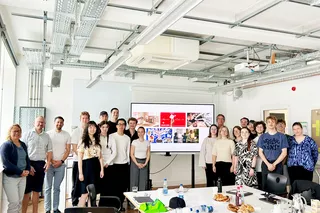
The HfG’s Master’s programme in Strategic Design, led by Prof. Leif Huff and Olivier Brückner, is collaborating with the long-established company STAEDTLER and, using Design Futuring, is investigating how STAEDTLER can position itself through creative tools and systems by the year 2035.STAEDTLER is an international company based in Nuremberg and is one of the longest-established manufacturers of writing, drawing and creative tools. Since the company was founded in the 19th century, STAEDTLER has been synonymous with high-quality products for writing, drawing and creative design – from classic writing instruments to materials for school, design and creative work.
Today, these creative practices are undergoing fundamental change. Communication and knowledge work are increasingly shifting to digital platforms, whilst traditional writing and creative tools are coming under economic pressure – for example, due to global competition and declining use in everyday life. At the same time, new developments are emerging: collaborative ways of working are on the rise, and hybrid practices bridging the physical and digital worlds are gaining in importance. Creative tools are more than mere aids in this context – they shape the way people think, learn, develop ideas and work together.
How can tools help people to discover and develop their creativity? How can we preserve our creative abilities and critical thinking? And how might interfaces between the analogue and digital worlds be designed so that people retain control and remain mentally healthy, whilst AI-supported systems take a supportive back seat?